Build a medication module you can actually grab.
A useful medical kit is more than a bag of bottles. It pairs the medicine you are able to keep on hand with a current list, refill contacts, cooling instructions, device power, and one person responsible for maintenance.
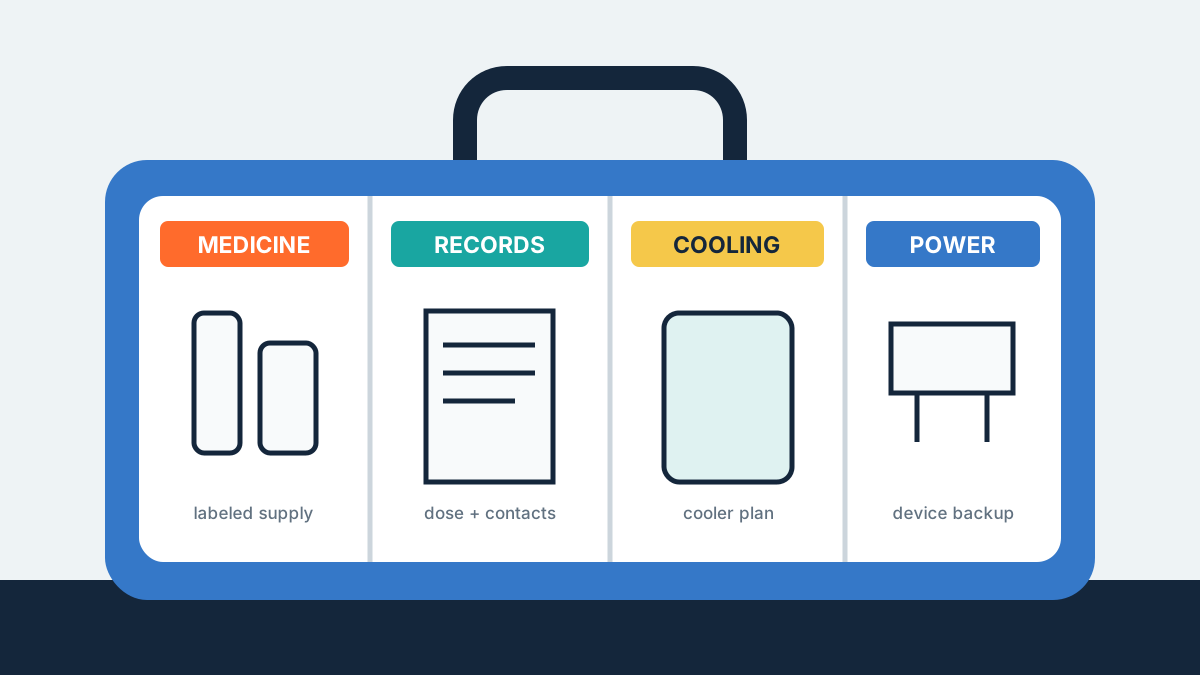
Start with a one-page medicine record
During an evacuation or outage, the most durable part of the module may be the information. The FDA recommends an up-to-date list that includes each medicine’s name and strength, what it treats, the amount taken and when, medical conditions, supply needs, and allergies. Add the prescribing clinician, usual pharmacy, insurance information, and an emergency contact.
Print two copies. Put one in a watertight sleeve inside the module and another with the household’s document module. Save an encrypted digital copy where an authorized household member can reach it. Review who may share the information during an emergency; a list no one can unlock is not a backup.
Build four clearly labeled sections
The supply your prescriber, pharmacist, insurer, and state rules allow, kept in labeled packaging.
Medicine list, prescription copies, allergies, contacts, insurance, and equipment details.
The product-specific temperature instructions, insulated carrier, cold packs, and temperature monitor if advised.
Chargers, compatible battery backup, adapters, and the device maker’s outage procedure.
Set a realistic supply target
CDC emergency-kit guidance for people with disabilities calls for at least a one-week supply of prescription medicine and a cooler for refrigerated medicine. Other CDC guidance for some higher-risk groups recommends seven to ten days or more. Those numbers are planning targets, not permission to refill early. Coverage rules, controlled-substance restrictions, product stability, and state emergency-refill laws differ.
- Ask the pharmacist what is possible. Discuss an emergency supply, synchronized refill dates, vacation or disaster overrides, and the state’s emergency-refill rules.
- Keep the working supply in rotation. A forgotten duplicate can expire while the daily bottle is replaced. Use a pharmacist-approved rotation method that preserves labels and storage conditions.
- Write the fallback. Record an alternate pharmacy, prescriber contact, insurer number, and the exact prescription information needed to request a replacement.
If you cannot maintain the full target, the record and refill plan still reduce delay. The module should show the honest quantity on hand instead of implying that every household can simply purchase an extra week.
Refrigerated medicine needs its own plan
“Keep cold” is not a complete instruction. Storage ranges and time outside refrigeration vary by product. Before an outage, read the labeled storage instructions and ask a pharmacist or manufacturer what container, temperature range, monitoring method, and maximum excursion apply to that specific medicine.
The FDA advises having a cooler and ice or frozen gel packs available when needed. That does not mean every medicine should touch ice or be frozen. Pack it exactly as the label and professional guidance require. Keep the product dry, keep its identifying information with it, and write the time it leaves controlled storage. If it was outside the recommended temperature, contact a pharmacist, health professional, or manufacturer before deciding whether it remains usable.
The FDA says medicines touched by floodwater or unsafe water should be discarded, even when the original container appears closed. Excessive heat can also reduce effectiveness. A lifesaving medicine may require special emergency judgment when no replacement is available; follow the FDA’s current advice and contact a professional as soon as possible.
Add the device and power layer
If treatment depends on an oxygen concentrator, infusion pump, powered wheelchair, communication device, CPAP, or another electrical device, the medication pouch is only one part of the system. Record the device name, model, settings provided by the clinician, power requirements, battery runtime, charging method, and supplier’s emergency number.
- Confirm which battery or power station is approved and how often it must be tested.
- Ask what to do if power fails during treatment; do not invent a restart procedure.
- Identify a powered destination before an outage, including an accessible route and transport plan.
- Label cables and adapters so another person can assemble the system.
Use a maintenance card, not memory
| Check | Suggested rhythm | What to record |
|---|---|---|
| Medicine list | After every prescription change | Name, strength, dose, schedule, prescriber |
| Quantity and dates | Monthly | Amount on hand, refill date, expiration date |
| Cold-chain supplies | Every three months | Pack condition, monitor, written temperature instructions |
| Device power | Manufacturer’s schedule | Runtime test, charge level, cable and battery condition |
| Full grab test | Every six months | Who carries it, where it goes, what slowed the exit |
Store the module where the person who needs it can reach it. If children are present, balance fast access with locked or child-resistant storage. Tell two trusted people where it is and which part must be moved into the cooler.
A 15-minute build session
- Photograph every current label and write the one-page medicine record.
- Call the pharmacy with three questions: emergency quantity, early-refill rules, and refrigerated-product instructions.
- Place the record, approved supply, contacts, cooling instructions, and device card into four labeled sections.
- Add a maintenance date to the calendar and assign one backup person.
Sources checked
The FDA updated its disaster medication guidance in September 2026, making this a timely point to verify household instructions rather than rely on an old packing list.
- FDA: Safe Drug Use After a Natural Disaster
- CDC: Prescriptions and Emergency Supplies
- CDC: Building an Emergency Kit for Individual Needs
- FDA: Medical Devices in Emergency Situations
- Ready.gov: Emergency Supply Kit Checklist
Research reviewed September 17, 2026.