Build a child module that leaves with the child.
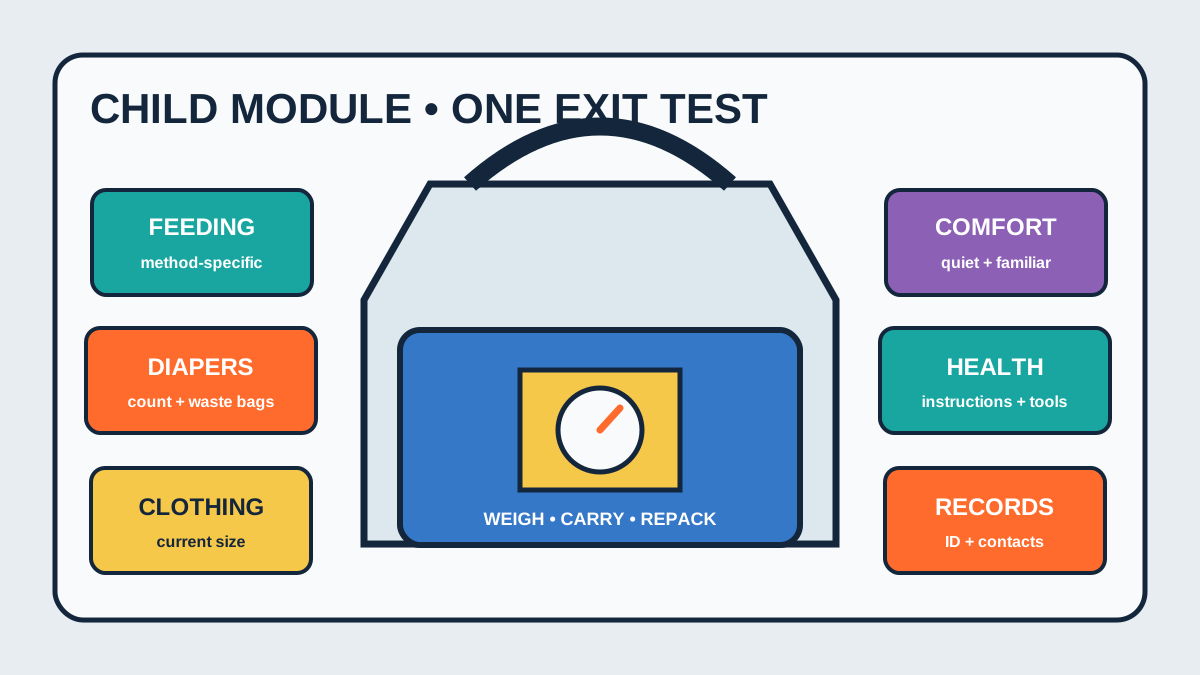
Infants and toddlers change faster than ordinary kit schedules. Pack feeding, diapers, clothing, comfort, health needs, and records as one labeled module—then test whether the assigned adult can carry it while safely moving the child.
Why a child module needs a shorter clock
A household kit can look complete while the child layer quietly becomes obsolete. Diaper size changes. A toddler outgrows shoes. Formula volume changes. A pacifier preference disappears. A new allergy or medicine instruction arrives. A carrier that fit last season no longer distributes weight safely.
CDC's infant and young child emergency checklist, updated in August 2026, tells families to check formula supplies monthly because babies grow quickly. A separate CDC checklist updated in April 2026 calls for individual kits tailored to daily needs and identifies feeding items, diapers, clothes, records, a carrier, comfort items, and age-appropriate supplies. These updates answer a recurring reader problem: “baby emergency kit” lists are often treated as one-time shopping lists when they are really maintenance systems.
The cleanest system is a child module that can move between the home kit, evacuation bag, caregiver handoff, or vehicle trip without being unpacked into five different places. The module belongs with the child and its maintenance card names the adult responsible for it.
Start with one real movement scenario
Choose a concrete trip before choosing a container. A five-minute walk from an apartment to a car creates a different carry limit than stairs, public transit, a shelter line, or a long walk from a disabled vehicle. Write the assumed route, destination, travel time, weather, and available adult hands at the top of the packing card.
Stroller, carrier, wheelchair, wagon, or walking plan that works on the expected route.
Who carries the child, the module, shared water, and any medical equipment?
Home of a trusted person, hotel, cooling center, shelter, or other current option.
What must work during travel and the first hours before supplies can be replaced?
If one adult must carry a child, a child module, a household bag, and a pet carrier, the plan is overloaded before the door opens. Move durable shared gear to a second adult, a rolling container, or the vehicle zone. Keep medicine, feeding supplies, identity records, and the child's immediate comfort needs with the responsible adult.
Build six labeled pouches
1. Feeding: match the normal method
Infant feeding cannot be reduced to “pack formula.” Some children feed directly at the breast, some receive expressed milk, some use formula, and some combine methods. Others use specialized formula, enteral feeds, or equipment that requires power and professional planning. Pack the supplies for the child's actual current method and write a backup plan with the child's health professional when specialized nutrition or equipment is involved.
CDC says ready-to-feed infant formula in sterile single-use containers is the safest formula option during an emergency because it does not need mixing water. Powdered infant formula is not sterile and requires safe water, accurate measurement, and clean feeding items. Never add extra water to stretch formula. Never use homemade formula. Keep formula in its original container and check product dates, lot information, and any recall notice.
For expressed milk, CDC recommends planning for a cooler and frozen ice packs, storage containers, pump parts, cords, batteries, and a manual option for an outage. Hand expression can also provide a power-free option when learned and practiced in advance. Cleaning still requires a safe place, soap, and clean water.
| Feeding path | Core module | Failure point to solve |
|---|---|---|
| Any direct breastfeeding | Disposable nursing pads, caregiver water and food, privacy/support plan | Separation, stress, lack of private or safe space |
| Expressed milk | Containers, cooler, frozen packs, pump parts, power/manual backup | Cold storage, cleaning, labeling, power |
| Ready-to-feed formula | Current product, single-use containers, appropriate feeding items | Enough current supply and safe disposal after opening |
| Powdered formula | Current product, safe water, exact measure, clean mixing and feeding tools | Water safety, contamination, cleaning, correct ratio |
| Young-child foods | Familiar nonperishable foods, snacks, disposable utensils | Age, texture, choking, allergy, and refrigeration needs |
Use the child's usual amount and professional plan to calculate quantities; do not copy another infant's ounces. Write how many feeds the module actually covers and the date it was checked. CDC's emergency list suggests planning for several days, but a grab module may intentionally cover only the travel and arrival window if a larger home or destination supply is documented. Make that boundary explicit.
2. Diapering and sanitation
Count diapers by the child's real daily use, then add a modest delay margin that still fits the carry limit. Include wipes, rash cream already used by the child, disposable changing pads, and resealable bags for wet clothes and waste. Pack hand-cleaning supplies that match current public-health guidance and the child's needs.
Separate one “first stop” change set in an outside pocket: diaper or pull-up, wipes, pad, waste bag, and spare lower layer. This prevents emptying the entire module on a sidewalk, in a car, or at a reception desk. Potty-learning children may need pull-ups, a portable seat solution, spare underwear, and a practiced way to ask for a break.
3. Clothing and weather
Pack current sizes, not aspirational sizes. Use complete changes in individual bags so another caregiver can find them. Include a weather layer, socks, footwear when appropriate, and a sleep layer that matches the destination. Avoid packing so many bulky outfits that feeding or medical supplies become inaccessible.
Review fit after every growth spurt and seasonal change. Vehicle storage is especially hard on formula, medicines, batteries, and some materials, while stored clothing can quickly become the wrong size. The two-zone vehicle kit keeps durable roadside gear in the car and treats temperature-sensitive, child-specific items as a grab bag.
4. Comfort and communication
A familiar object can help a young child regulate during noise, crowds, darkness, and disrupted sleep. Choose one or two compact items the child already knows: a small comfort object, pacifier if currently used, board book, quiet activity, or headphones used in everyday life. Pack backups only when losing the item would make feeding or movement much harder.
Include a simple routine card for another caregiver: usual words for water, bathroom, pain, and comfort; sleep cues; sensory triggers; and calming strategies. Keep it practical and protect private information. For a child who uses a communication device or picture board, integrate that system into the emergency handoff card and power plan.
5. Health needs
Pack the child's current medicine and health supplies according to a clinician, pharmacist, label, insurer, and applicable laws. Include a medicine list, allergies, diagnoses needed for care, dose and timing instructions, prescriber and pharmacy contacts, thermometer, and equipment instructions. Do not use a generic checklist to decide medicines or doses.
Temperature-sensitive medicine and powered equipment require a separate plan. Record storage ranges, compatible batteries, charging method, and the exact action to take during an outage. The medication module guide provides a fuller workflow.
6. Records and reunification
Carry a current photo, child's name, date of birth, caregiver contacts, an out-of-area contact, medical and allergy summary, vaccination record where useful, insurance information, and custody or consent documents needed for the family's situation. Store copies in a waterproof sleeve and protect digital versions appropriately.
CDC's 2026 child checklist suggests a durable contact or identification tag for young children. Decide what information can be safely visible and what belongs inside the module. Teach toddlers and older young children the names of trusted adults and a simple family password as developmentally appropriate. Never put unnecessary private details on the outside of a bag.
Use a quantity card instead of a universal list
The right quantity comes from observed use and a named planning window. Track one ordinary day before filling the module. Count feeds, diapers, clothing changes, medicine events, wipes, snacks, and water used for preparation and cleaning. Then separate the load into three layers.
| Layer | Purpose | Examples |
|---|---|---|
| Immediate pocket | Reach without setting down every bag | One change set, one feed, wipes, comfort item, handoff card |
| Child grab module | Travel and first-arrival continuity | Current feeding, diapers, clothing, health, records |
| Destination or home reserve | Extends the plan beyond carry capacity | Bulk diapers, larger food supply, portable crib, extra water |
This approach makes tradeoffs visible. A “72-hour bag” that cannot be lifted while carrying the child is not a functional plan. A smaller grab module can be honest and useful when the larger reserve and destination are current, reachable, and documented.
Run a 10-minute exit test
- Set the start condition. Put the module where it normally lives. Wear ordinary clothes and use only the adults normally available.
- Move the child safely. Use the current carrier, stroller, wheelchair, or walking plan. Do not simulate unsafe lifting or rush the child.
- Carry every assigned item. Include shared household gear, keys, phones, medical devices, and pets that would leave with the same adult.
- Reach the real transition point. Go to the vehicle, building exit, pickup point, or safe practice boundary.
- Open the first-use items. Retrieve a feeding item, diaper set, record, medicine instruction, and comfort object without unpacking the bag.
- Record friction. Note excessive weight, missing hands, hidden items, stairs, narrow doors, weather exposure, and anything the child could not tolerate.
If the assigned adult cannot move the child and module safely, reduce or redistribute weight before adding more supplies. Keep critical child-specific items together, move durable shared gear elsewhere, and arrange help or accessible transport for needs that one person cannot carry.
Maintain on three clocks
| Clock | Trigger | Check |
|---|---|---|
| Monthly | Calendar reminder | Formula/food amount and dates, feeding plan, medicine quantity, batteries |
| Growth | Size, mobility, or routine changes | Diapers, clothing, shoes, carrier fit, foods, comfort, communication |
| Event | Prescription, allergy, caregiver, destination, or season changes | Records, instructions, contacts, transport, weather layer, handoff test |
Rotate supplies into normal household use before they expire when the product and care plan allow it. Do not introduce emergency-only formula, food, medicine, or equipment merely to avoid waste. Replace a used module immediately and write the new check date on the outside card.
A focused 30-minute build
- Write the child's current feeding, diapering, mobility, communication, health, and comfort needs.
- Choose a travel-and-arrival window and count supplies from observed daily use.
- Pack six labeled pouches and one immediate pocket.
- Create the identity and handoff card; protect private details.
- Weigh the module and run the exit test with the real child-movement method.
- Schedule a monthly feeding check and a full review after every growth or care change.
Sources checked
CDC published or updated several infant and young-child emergency resources in 2026. Product labels and the child's current health professional instructions remain controlling.
- CDC: Emergency List for Families With Infants and Young Children
- CDC: Infant and Young Child Feeding in Emergencies Toolkit
- CDC: Emergency Kit Checklist for Pregnant Women, Infants, and Children
- CDC: Emergency Preparedness, Response, and Recovery for Infant Feeding
- CDC: Special Considerations for Emergencies
- Ready.gov: Ready Kids
Research reviewed October 15, 2026.